Programme
JOHN FIELD
Nocturne No. 17 in C Major (4′)
LUDWIG VAN BEETHOVEN
Piano Sonata No. 19 in G minor, Op. 49 No. 1 (17′)
I. Andante
II. Rondo: Allegro
JOHN FIELD
Nocturne No. 1 in E-flat Major (4′)
Nocturne No. 2 in C minor (5′)
Nocturne No. 4 in A Major (5′)
Nocturne No. 10 in E Major (7′)
LUDWIG VAN BEETHOVEN
Piano Sonata No. 30 in E Major, Op. 109 (19′)
I. Vivace ma non troppo, sempre legato — Adagio espressivo
II. Prestissimo
III. Gesangvoll mit innigster Empfindung. Andante molto cantabile ed espressivo
Interval
JOHN FIELD
Nocturne No. 14 in G Major (3′)
Nocturne No. 16 in C Major (8′)
Nocturne No. 9 in E minor (4′)
LUDWIG VAN BEETHOVEN
Piano Sonata No. 14 in C-sharp minor, Op. 27 No. 2, “Moonlight” (16′)
I. Adagio sostenuto
II. Allegretto — Trio
III. Presto agitato
Note: John Field did not originally assign numbers to his nocturnes, and due to the variety of sources and editions, there is no definitive ordering or numbering. For Alice’s new album and concert, she has chosen to use the numbering from Franz Liszt’s edition, which he personally compiled and published.
John FIELD (1782 - 1837)
Nocturne No. 17 in C Major (1836)
With its strong definition and clarity, tonight’s first nocturne, No. 17 in C Major, may feel more like a sonata opening movement than what we might expect from a dreamy nocturne. It is gentle and song-like throughout, even conveying mischief in its unpredictability.

Ludwig van BEETHOVEN (1770 - 1827)
Piano Sonata in G minor, Op. 49 No. 1 (1797)
I. Andante
II. Rondo: Allegro
Ludwig van Beethoven wrote no pieces that he called nocturnes, though there is a strand of quiet introspection – even visionary transcendentalism – running through some of his music that we might legitimately term ‘nocturnal’. It might be quite a stretch to claim there’s anything particularly nocturnal about his Piano Sonata in G minor, Op. 49 No. 1, though its extreme brevity and its musical sophistication make it something of a precursor to the spirituality of the Sonata in E Major, Op. 109, which we’ll hear later.
The Sonata in G minor was published in 1805, two years after he had met Field, without Beethoven’s explicit consent. His younger brother Kaspar, who had effectively been working as the composer’s business manager, dispatched it to satisfy a publisher’s demand for new material. Beethoven had written the piece several years earlier, probably as a straightforward work for teaching purposes, though there is little compromise in the music’s emotional complexity. After its introspective first movement, Beethoven dispenses with the traditional second (and maybe third) sonata movements to move straight into a finale, whose spiky, mercurial theme returns again and again.
John FIELD (1782 - 1837)
Nocturne No. 1 in E-flat Major (1812)
Nocturne No. 2 in C minor (1812)
Nocturne No. 4 in A Major (1817)
Nocturne No. 10 in E Major (c. 1832)

We return to Field for a quartet of pieces that demonstrate the breadth of moods he conjured in his nocturnes. With its gentle, singing melody and rippling accompaniment, No. 1 may be close to what we would expect from the form, with No. 2 in many ways its melancholy sibling. No. 4 is on a more ambitious scale, its opening surely evoking an opera aria before a central section that passes through yearning, despair, even anger. No. 10 is equally ambitious: it opens as a song with, perhaps, gently strummed guitar accompaniment, and closes with keyboard flights of fancy that grow ever more effusive in their decorations.
Ludwig van BEETHOVEN (1770 - 1827)
Piano Sonata No. 30 in E Major, Op. 109 (1820)
I. Vivace ma non troppo, sempre legato – Adagio espressivo
II. Prestissimo
III. Gesangvoll mit innigster Empfindung. Andante molto cantabile ed espressivo
From a sonata composed by the still youthful Beethoven, we turn to the first of the composer’s mighty final trilogy of piano sonatas, written just a few years before his death. Like tonight’s earlier sonata, however, the Sonata in E Major, Op. 109, is work of immense compression and concentration: its two succinct opening movements set up a battle of opposing extremes that is only resolved by the ineffable, visionary calm of its unhurried finale.
Beethoven wrote the piece in 1820, and dedicated it to Maximiliane Brentano, daughter of his friends and benefactors Franz and Antonie Brentano (the latter very possibly the dedicatee of his amorous letter of 1812 to an unidentified ‘immortal beloved’). As earlier, Beethoven here treats established keyboard conventions with a freedom and originality that aligns the piece with similar innovations in the newfangled nocturne form.
His remarkably compact opening movement contrasts a brief opening theme with a second idea in an entirely different key, tempo and rhythm. He throws us into the nightmarish intensity of his frenzied second movement without a break. It is left to his third movement – a songful theme with six eclectically disparate variations – to reconcile the opposing forces he’s unleashed. When the finale’s theme returns to close the Sonata, we may (to misquote TS Eliot) feel that we’ve arrived back where we started, only to know the place for the first time.
John FIELD (1782 - 1837)
Nocturne No. 14 in G Major (1827)
Nocturne No. 16 in C Major (1835)
Nocturne No. 9 in E minor (1821)
A final selection from Field’s 18 nocturnes again shows the breadth of his creations in the form, from the open-air contentment of No. 14 to the yearning of No. 16 and the deep, resigned grief of No. 9. Listen out, too, for the insistent bell that chimes through its magical closing passage, perhaps to wake us from our slumber.
Ludwig van BEETHOVEN (1770 - 1827)
Piano Sonata in C sharp minor, Op. 27 No. 2, “Moonlight”(1802)
I. Adagio sostenuto
II. Allegretto – Trio
III. Presto agitato
What for us is probably the closest Beethoven came to writing a nocturne – as suggested by its ‘Moonlight’ epithet – was probably nothing of the sort to the composer himself. That nocturnal nickname wasn’t his: it is usually put down to German poet and novelist Ludwig Rellstab, who likened the Sonata’s opening to moonlight shining on Lake Lucerne. For Beethoven, the Sonata was ‘quasi una fantasia’ (or ‘almost a fantasia’), again indicating a fresh and radical approach to long-standing sonata conventions.

Beethoven wrote the piece in 1802, and dedicated it to his keyboard pupil, Countess Julie ‘Giulietta’ Guicciardi, with whom he became so infatuated that he even proposed marriage (an offer politely but firmly declined by the young woman’s aristocratic parents). Connecting a composer’s biography and musical creations is seldom convincing, but it wasn’t an easy time for Beethoven, who was coming to terms with his inevitable loss of hearing, and who that same year would write a letter to his brothers (never sent) that revealed he had contemplated suicide. The composer himself never indicated any biographical subtext to the Sonata in C sharp minor, but it’s not hard to find one.
Its slow, sombre opening movement is probably the closest Beethoven came to some of Field’s nocturnal creations. Beethoven follows it, however, with a bright, tripping central movement, as though the clouds have parted to let in the light. His final movement is music of relentless ferocity, stormy and angry from start to finish. It provides an unflinchingly bleak response to the opening movement’s sombre contemplations, as well as the Sonata’s most technically ostentatious material.
——Programme notes by David Kettle
Biography
Alice Sara Ott, piano

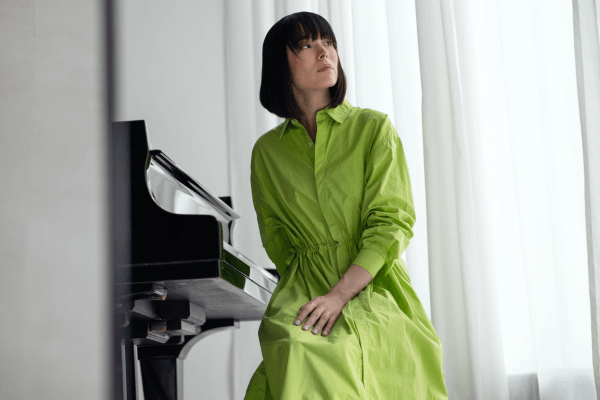
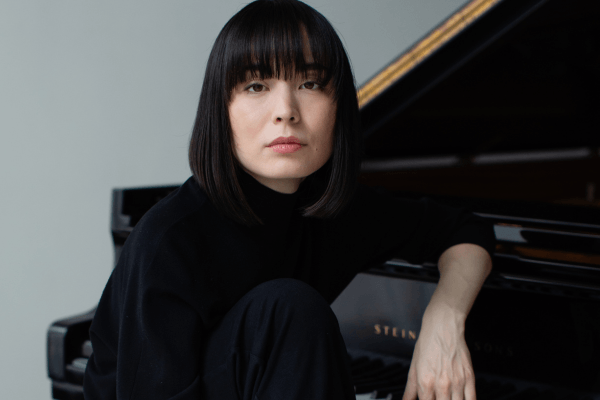
Alice Sara Ott is one of today’s most forward-thinking classical musicians, with her visionary artistic projects, globally successful albums, and collaborations with the world’s leading orchestras and conductors. Captivating audiences worldwide with her unique interpretations and technical brilliance, Alice’s innovative recital concepts redefine classical music for the modern era. She has recorded for Deutsche Grammophon for over 16 years, leading to album streams of over half a billion.
In the 2025/26 season Alice is the Artist in Residence at Konzerthaus Berlin, following her acclaimed past residencies at London’s Southbank Centre, Paris’ Radio France and Utrecht’s TivoliVredenburg. Her residency includes opening the season with Bryce Dessner’s Piano Concerto conducted by Joana Mallwitz, as well as a major European tour later in the spring.
She will also continue her recital tour across China and Europe of her John Field and Beethoven project. Other highlights of the season include a European tour with Orchestre Philharmonique de Radio France and Jaap van Zweden, and the debut of her new chamber music project Papa Haydn, a tribute to the composer and his contemporaries that explores the ways music was shared amongst their friends. Alice will perform with orchestras including the London Symphony Orchestra, Chicago Symphony Orchestra, Orchestre de la Suisse Romande, Iceland Symphony Orchestra, Festival Strings Lucerne and Seoul Philharmonic Orchestra.
In December 2025, Alice Sara Ott starred alongside Isabelle Huppert in the world premiere of a conceptually staged programme based on excerpts of the letters from John Cage to Merce Cunningham with music by Bryce Dessner at the Fondation Louis Vuitton in Paris.
Alice’s next recording, an album of solo piano works by Jóhann Jóhannsson, was released in March 2026 on Deutsche Grammophon. This follows her recent album of John Field’s complete Nocturnes (2025), which was a global success and reached No.1 on the Apple Music Classical chart for nine weeks and was awarded their Album of the Year, 2025.
https://www.alicesaraott.com/
The content of this programme does not reflect the views of the Government of the Hong Kong Special Administrative Region.