


The content of this programme does not reflect the views of the Government of the Hong Kong Special Administrative Region.
Title Sponsor



Title Sponsor
Antonín DVOŘÁK
Slavonic Dances Op. 72, No. 7 Michael Stephen Brown (piano), Serena Wang (piano)
Michele MANGANI
Pagina d’album (Autumn Leaf)Wenzel Fuchs (clarinet), Serena Wang (piano)
J. B. LOEILLET
Duo for Clarinet and Flute Yasuko Fuchs (flute), Wenzel Fuchs (clarinet)
Edward ELGAR
Salut d’ Amour (Love’s Greeting) (arr. Julian Milone)Dmitri SHOSTAKOVICH
Cheryomushki Galop (arr. Julian Milone)Stefan Jackiw (violin), Cho-Liang Lin (violin), Angela Chan (violin), Hannah Tam (violin), DaXun Zhang (bass)
Jules MASSENET
Méditation from Thaïs
Stefan Jackiw (violin), Michael Stephen Brown (piano)
Fritz KREISLER
Schön Rosmarin (Lovely Rosemary)Stefan Jackiw (violin), Michael Stephen Brown (piano)
Enrique GRANADOS
Orientale from 12 Danzas Españolas (arr. Piatigorsky)Gary Hoffman (cello), Michael Stephen Brown (piano)
Gaspar CASSADÓ
RequiebrosGary Hoffman (cello), Michael Stephen Brown (piano)
George HANDEL / Johan HALVORSEN Passacaglia for Violin and Viola Yura Lee (violin), Timothy Ridout (viola)
Hugo WOLF
Italian SerenadeSimply Quartet
Antonín Dvořák’s first set of Slavonic Dances became his international breakthrough. Commissioned to echo Brahms’s success, Dvořák instead created something wholly original—works of sparkling sophistication that evoke Slavic folk spirit through inventive rhythms and modal harmonies, not direct quotation. No. 7 in C Minor is a whirlwind Skočná, built on driving, ostinato rhythms and stamping themes that generate orchestral force at the keyboard, briefly relieved by a warmer central section before the relentless energy returns. Together, these dances capture the dual soul of Dvořák’s artistry: profound songfulness and unbridled joy. They remain a delightful test of partnership and rhythmic precision for two pianists at one instrument.
Pagina d’album (Album Leaf) is an original composition for clarinet with piano accompaniment or solo clarinet, written by Italian composer Michele Mangani. Michele Mangani is an Italian conductor, composer and clarinetist. As a composer, he is the author of over 800 pieces for chamber ensembles for orchestra and choir. This work was composed for the International Clarinet Competition “G. Mensi” in 2007. It is distinguished by the simplicity of the lines and the tuneful melody, and it has quickly spread worldwide both among young clarinetists and great performers.
Jean Baptiste Loeillet of Ghent was a Flemish Baroque composer born in Ghent, who later styled himself “Loeillet de Gant” to distinguish from his cousin, Jean-Baptiste Loeillet of London. He spent much of his career in France, serving the archbishop of Lyon, and composed extensively for recorder, including trio sonatas, unaccompanied duos, and solo sonatas with continuo—works in Corelli’s style that were widely published and reprinted. In this duo for clarinet and flute, the flute’s brightness complementing the clarinet’s warm, vocal tone. The work unfolds as a poised musical dialogue, marked by balanced imitation, tasteful ornamentation, and dance-like rhythmic vitality characteristic of early eighteenth-century salon music.
Elgar composed Salut d’Amour as a love song to his future bride, Alice Roberts. In the summer of 1888 (age 31), Elgar decided to take a holiday with his dear friend Dr. Charles Buck. As Elgar departed Worcester for Dr. Buck’s Settle, Yorkshire estate, Alice gave him a poem she had written entitled Love’s Grace. While at Settle, Elgar, much taken with Alice’s poem, decided to reciprocate with a short piece of music especially for Alice. He titled the piece Liebesgruss (Love’s Greeting), dedicated “To Carice”, a mashup of Alice’s forenames Caroline Alice. Elgar presented the musical love poem to his future bride on his return from Settle. They were married the following year.
Dmitri Shostakovich’s comic operetta Cheryomushki premiered in 1959, lightly satirizing the Soviet housing crisis through a story of bureaucracy, romance, and dreams. Within its playful score, the Galop bursts forth as a whirlwind of infectious energy—a fast-paced dance number full of slapstick humor and rhythmic drive. In Shostakovich’s hands, the traditional comedic Galop becomes both a parody of Soviet-style “merriment” and a showcase of his brilliant musical wit. Its syncopated rhythms, cheeky woodwind lines, and percussive exuberance evoke the chaotic joy of a crowded celebration, delivered with his trademark blend of irony and orchestral brilliance. Julian Milone’s arrangement faithfully captures this manic spirit for flexible ensemble, tumbling forward with relentless momentum as it bounces between playful themes and boisterous tutti passages. Above all, the piece is unapologetic fun—a reminder that behind the solemn symphonist lay a composer who could craft exhilarating, crowd-pleasing comedy with equal mastery.
Thaïs, composed in 1893, was described by Massenet as a ‘comédie lyrique’. Set in Egypt, it describes efforts by the monk, Athanaël, to convert Thaïs, an Alexandrian priestess of Venus, to Christianity. Méditation is the intermezzo in Act 2, between scenes 1 and 2, where Thaïs is reconsidering her ideas about love. The original melody was written for a violin solo, usually played by the concertmaster, accompanied by the rest of the orchestra. Marked ‘andante religioso’, the sustained melody soars over a gentle accompaniment of broken chords. The phrases build as they answer each other with great lyricism. The solo line in the central section is more agitated before the opening soaring melody returns.
Fritz Kreisler was possibly the most beloved violinist of the earlier half of this century. He pioneered in the use of vibrato as a constant coloring, giving an unparalleled sweetness to the tone (most violinists before Kreisler used vibrato only sparingly). Kreisler is best remembered today for the many short salon pieces which he wrote to enhance his repertoire. Many of them feature lilting waltz rhythms, including this “Schön Rosmarin”. Written in a graceful Viennese style, this piece captures the elegance and light-heartedness of a bygone era. With its lilting rhythms, delicate phrasing, and nostalgic melody, Schön Rosmarin evokes the image of a graceful dance in an old-world salon. A favorite encore piece among violinists, it showcases Kreisler’s signature blend of lyricism, charm, and virtuosity in a compact, delightful form.
Enrique Granados’s Oriental, from his celebrated Twelve Spanish Dances, is an exquisite miniature steeped in the exotic allure of Spain’s Moorish past. Granados evokes not the literal East, but a romanticized “orientalism” of the Spanish imagination—a world of perfumed gardens and bittersweet longing. Originally for piano solo, the piece unfolds as a slow, sensuous habanera, its hypnotic rhythm and melancholic melody echoing both Andalusian flamenco and distant North African roots. In legendary cellist Gregor Piatigorsky’s arrangement, the soulful essence of the original is preserved and deepened. Piatigorsky translates the piano’s textures into richly idiomatic string writing, allowing the melody to sing with the cello’s expressive warmth while the accompaniment gains new intimacy and rhythmic subtlety. The result is a captivating dialogue between Spanish romanticism and golden-age string virtuosity—a small gem that glows with the heat of the Mediterranean sun and the shade of ancient courtyards.
Gaspar Cassadó forged an essential Spanish cello repertoire, blending Catalan lyricism, flamenco spirit, and dazzling virtuosity. A child prodigy and Pablo Casals’s student, their bond was strained when Casals went into exile after the Spanish Civil War, condemning those who remained. Cassadó, professing to be “apolitical,” performed in Spain, leading to a rupture only later healed with Yehudi Menuhin’s mediation. Composed in 1934, Requiebros—meaning “flirtatious compliments”—showcases Cassadó at his most characterful. Its flashy piano introduction sets a Spanish scene before the cello enters with the proud flair of a bullfighter. A spirited, rhythmically infectious dance follows, marked by expressive headings like con fantasia and con passione. A lyrical, yearning middle section in E minor offers contrast, its aching melody soaring over a pulsing accompaniment. After a cadenza-like passage highlighting the cello’s rhetorical voice, the dance returns with renewed energy, rushing toward a flamboyant close. In Requiebros, Cassadó celebrates not only the cello’s technical possibilities but also the soul of Spain—proud, passionate, and irresistibly alive.
This brilliant dialogue for string duo bridges two centuries. Its foundation is the passacaglia from Handel’s Harpsichord Suite in G Minor (c. 1733), built on fifteen variations over a repeating bass. Norwegian violinist Johan Halvorsen reimagined it, distilling the variations into twelve for violin and viola. Far more than a transcription, his arrangement is a virtuosic showcase of timbral invention: one variation suggests guitar strumming via pizzicato, while another uses sul ponticello for an eerie, glassy sound. The finale is a rhythmic tour de force, driven by bouncing ricochet bowing to an exhilarating close. Handel’s Baroque genius provides the architectural strength and melody, while Halvorsen’s late-Romantic sensibility supplies fiery passion and instrumental brilliance. Together, they created both a respectful homage and a dazzling independent showpiece, celebrating the timeless art of musical conversation.
It is a poignant paradox that Hugo Wolf’s Italian Serenade—so light and charming—emerged from a life shadowed by despair. Though his final years were spent in an asylum, periods of lucidity allowed him to create over 300 songs, securing his place among the greatest masters of German Lied. While vocal music was his supreme outlet, the Italian Serenade remains his most beloved instrumental work. Begun in 1887 for string quartet and orchestrated in 1892, it was intended as the first movement of an unfinished suite. We can only regret this, for the Serenade is a masterpiece of deft orchestration and e ervescent character. Its melodies unfold like improvised song, with the solo viola emerging as a central, eloquent “singer”—revealing Wolf thinking vocally, even in an orchestral frame. The transparent, warmly coloured texture perfectly evokes an imagined, sun-drenched Italy. Thus, the work stands as a singular, radiant interlude in Wolf’s tormented biography: a testament not to his su ering, but to the indomitable artistic spirit that could, however fleetingly, transcend it.
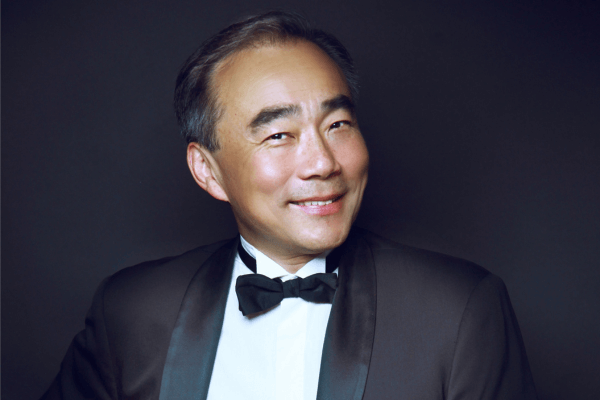
Violinist Cho-Liang Lin is lauded the world over for the eloquence of his playing and for superb musicianship. In a concert career spanning the globe for more than 30 years, he is equally at home with orchestra, in recital, playing chamber music, and in the teaching studio. Performing on several continents, he has performed as a soloist with virtually every major orchestra in the world. An advocate of contemporary music, he has collaborated with and premiered works by Tan Dun, Esa-Pekka Salonen, Bright Sheng and more. An avid chamber musician, He served as artistic director for La Jolla SummerFest for 18 years. He is currently the Artistic Director of the J & A Beare Premier Music Festival in Hong Kong. In 2019, he founded the Taipei Music Academy & Festival to bring the foremost musicians from around the world to work and perform with a select group of young musicians.
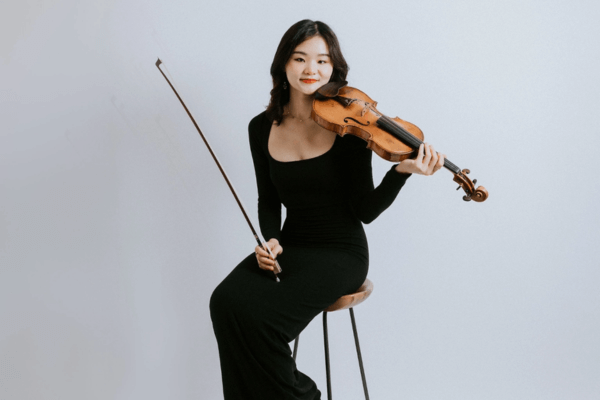
Top prize winner of the Hannover Joseph Joachim and Singapore International Violin Competition, Hong Kong-born violinist Angela Chan has performed with leading orchestras including the NDR Radiophilharmonie and Singapore Symphony Orchestra. As the founder of the AYA Piano Trio, she performs extensively across the U.S. and Europe. Praised for her poetic expression and synthesis of Eastern and Western cultures, Chan is a graduate of the Curtis Institute of Music and is currently an Artist-in-Residence at the Queen Elisabeth Music Chapel.
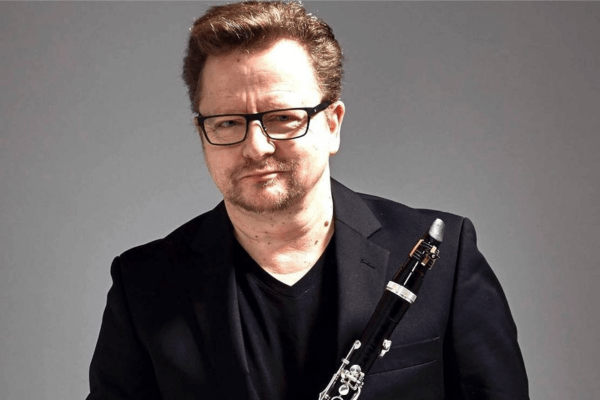
Wenzel Fuchs is the principal clarinet of the Berliner Philharmoniker. He began his professional career as principal clarinettist of the Vienna Volksoper and the ORF Radio Symphony Orchestra before joining the Berliner Philharmoniker in 1993. Fuchs is active as a soloist and chamber musician, appearing with such partners as Yefim Bronfman, Emmanuel Pahud, and András Schiff. He also teaches at the Karajan Academy of the Berliner Philharmoniker and gives masterclasses throughout the world. Besides his many masterclasses in Japan, Europe, and the United States, he appears throughout the world as a soloist with such orchestras as the Tokyo Philharmonic, the China National Symphony Orchestra, the Korean Symphony Orchestra, the Berlin Symphony, and the Berlin Philharmonic. Currently, Wenzel Fuchs is a professor at the Mozarteum University in Salzburg.
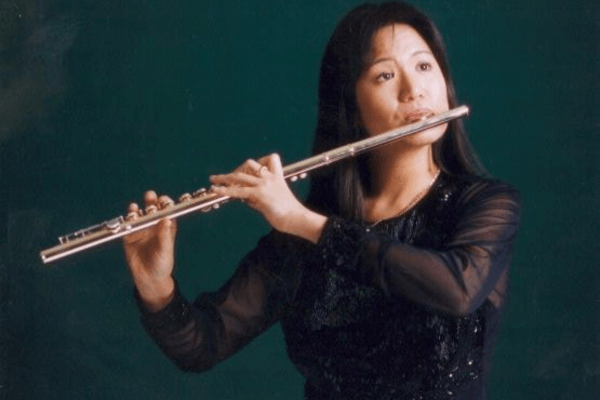
Yasuko Fuchs is a professional flute player from Japan. From 1989 to 1995, she was a flute professor at the Vienna Conservatory. Since 1994 she lives in Berlin, where she performs as a soloist, orchestra musician and chamber musician. Yasuko Fuchs performs regularly as a soloist in the Berlin Philharmonic and plays as a temporary assistant with the Berliner Philharmoniker and other orchestras. Besides, Yasuko won a prize at the International Competition for Brass Chamber Music in Graz.
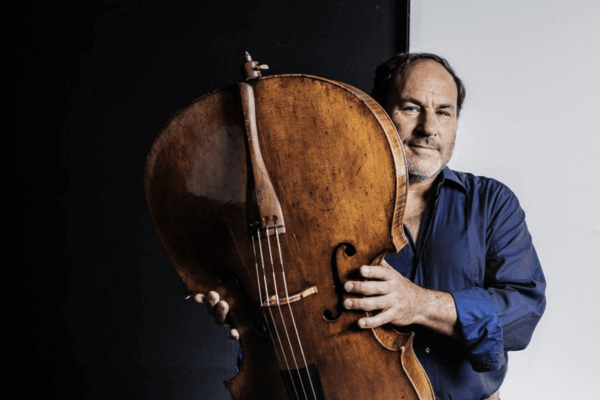
Gary Hoffman’s style is characterised by fullness of sound, instrumental mastery, and exceptional artistic sensibility. He made his debut at the Wigmore Hall in London at the age of 15, quickly followed by New York. At the age of 22, he became the youngest faculty appointee in the history of the Indiana University School of Music. After winning the Premier Grand Prix of the Rostropovich International Competition in Paris in 1986, he embarked on an international career, appearing with the world’s most noted orchestras, in major recital and chamber music series, and at prestigious festivals. This is Gary’s fifth appearance at this Festival.
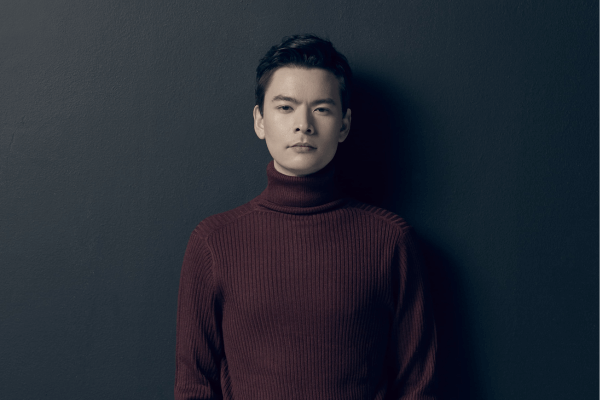
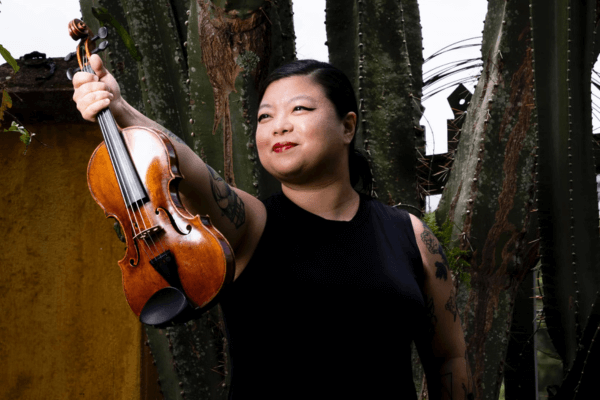
Violinist/violist Yura Lee is one of the rare artists equally celebrated on both instruments, with a career spanning three decades worldwide. She has performed with major orchestras including New York and Los Angeles, and appeared in renowned halls such as Wigmore, Musikverein and the Concertgebouw. A recipient of the Avery Fisher Career Grant, she also won top prizes at the Hannover, Kreisler, Paganini and the ARD Competition. She performs with the Chamber Music Society of Lincoln Center and Boston Chamber Music Society.
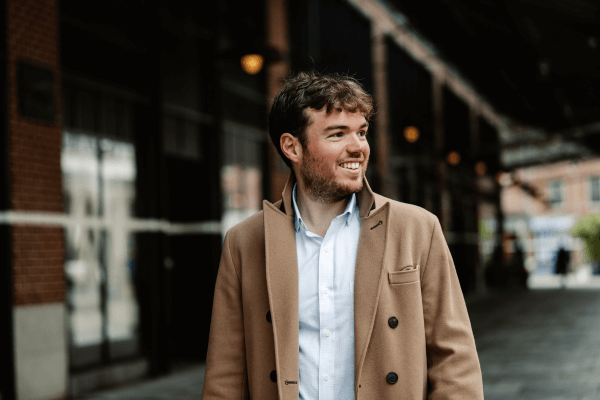
Violist Timothy Ridout has performed worldwide with leading orchestras, including the Bavarian Radio Symphony, BBC Symphony, Tonhalle Zürich, and Tokyo Metropolitan Symphony. A sought-after chamber musician, he appears at Wigmore Hall, Concertgebouw Amsterdam, and festivals including Verbier, Salzburg, and Mecklenburg-Vorpommern, partnering with artists such as Janine Jansen and Isabelle Faust. His award-winning discography on Harmonia Mundi includes the 2023 Gramophone Award for Elgar’s Concerto (Tertis arrangement). Ridout is a former BBC New Generation Artist and plays a Peregrino di Zanetto viola c. 1565-75, generously on loan from a patron of the Beare’s International Violin Society. He is making his Hong Kong debut in the 2026 Beare’s Premiere Music Festival.
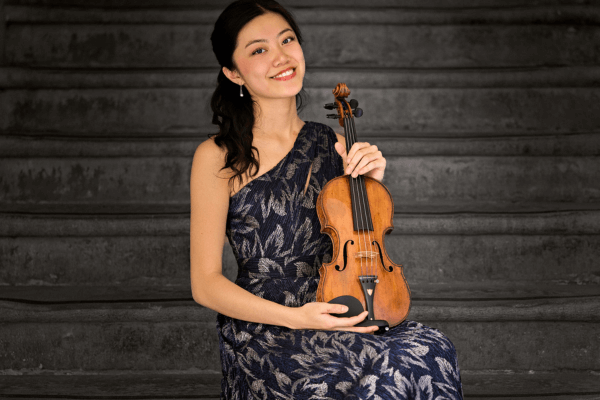
20-year-old Hong Kong violinist Hannah Tam has won major international prizes, including the Menuhin International Competition (Third and Audience Prizes, 2021) and the Concorso Andrea Postacchini (First Prize, Overall Winner). She has appeared worldwide with orchestras such as the Hong Kong Philharmonic Orchestra, Brevard Symphony, and Kansas City Symphony, collaborating with artists including Itzhak Perlman and Gil Shaham. In 2020, Hannah was granted The Certificate of Commendation by the Hong Kong SAR Government and was a recipient of the Hong Kong Jockey Club Music and Dance Fund Scholarship. Hannah is a Jubilee Ambassador of Bärenreiter and is studying at the Curtis Institute of Music. She currently plays on a 1757 Giovanni Battista Guadagnini violin, the “ex-Herten.”
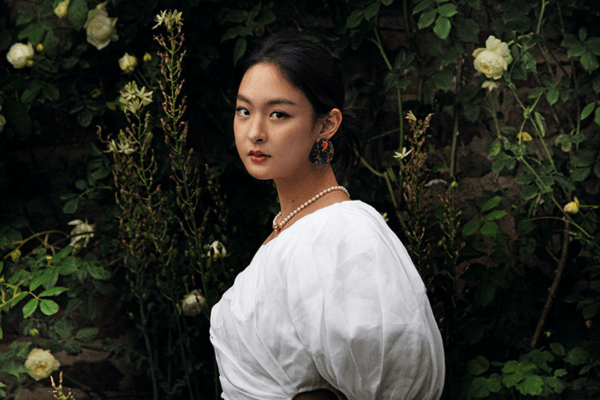
Serena Wang has already amassed significant practical experience despite her young age. Concert appearances include working with the China Philharmonic, Shanghai Symphony, New York Philharmonic, Israel Philharmonic, and Hong Kong Philharmonic, among others. She frequently collaborates with violinist Ning Feng, and they will be appearing together at Wigmore Hall in February 2026. Conductors she has worked with include Yu Long, Zubin Mehta, Gustavo Riveroeber, and Zhang Guoyong. Serena pursued her undergraduate studies at the Juilliard School and entered the Curtis Institute of Music in 2024. She is an active chamber musician and is also passionate about performing with vocalists
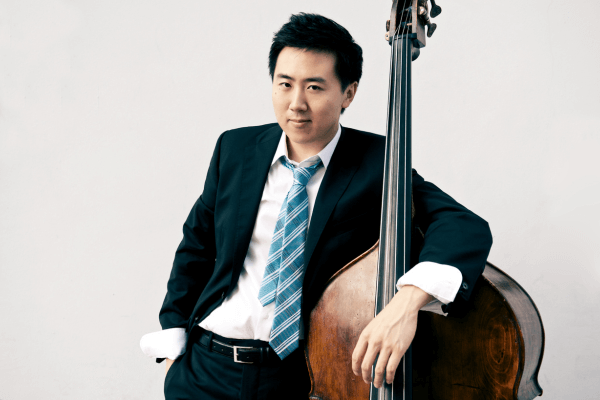
DaXun Zhang has appeared as a soloist with the Minnesota Orchestra, Orchestra of St. Luke’s, and Tokyo Symphony. As a chamber musician, he has participated in music festivals such as Beare’s Premiere Music Festival, La Jolla SummerFest, and Strings in the Mountains, and he was a member of the Chamber Music Society of Lincoln Center. He has won an Avery Fisher Career Grant. Zhang’s recordings include Bassic Bach and Ditto, as well as two albums with Yo-Yo Ma and the Silk Road Ensemble for Deutsche Grammophon, among others. Zhang is currently a resident faculty member at The Tianjin Juilliard School. This is Zhang’s eighth appearance at this Festival.
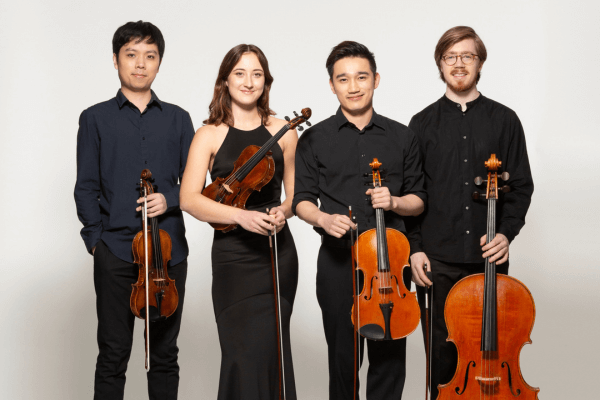
Simply Quartet’s current members came together during their studies at the University of Music and Performing Arts Vienna, immersing themselves in meticulous study of the scores and deciphering the musical text with great curiosity. The Simply Quartet has been awarded four first prizes at prestigious chamber music competitions: the Carl Nielsen International Chamber Music Competition (2019), the Quatuor à Bordeaux (2019), the International Chamber Music Competition, Franz Schubert and Modern Music (2018), and the 7th International Joseph Haydn Chamber Music Competition (2017). They were also the selected ensemble of the ECHO Rising Stars series in 2021/22, resulting in debuts in some of the most important concert halls in Europe. Originally founded in Shanghai under the auspices of Jensen Horn-Sin Lam, the quartet moved to Vienna to intensively explore the essence and origins of quartet playing.